
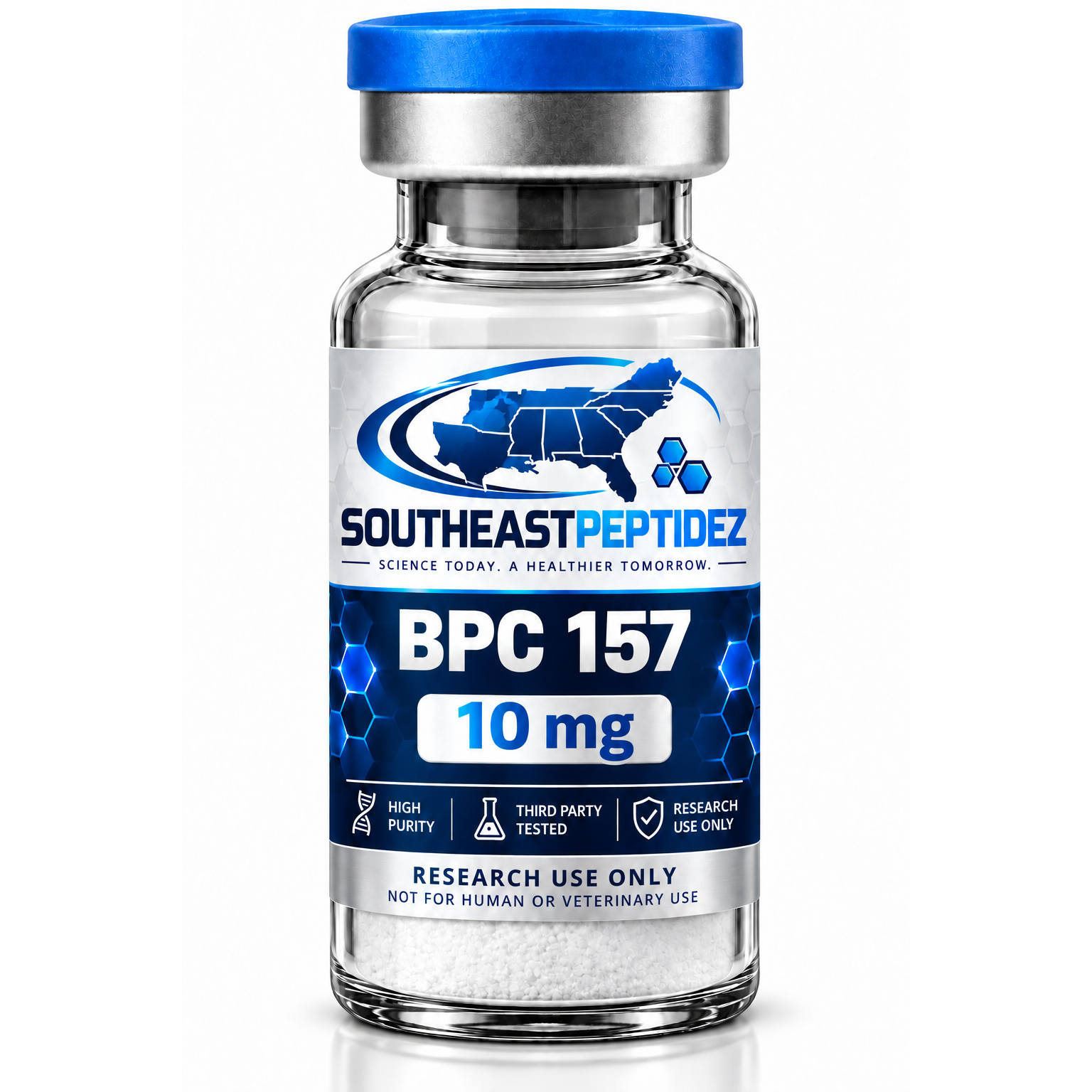
BPC-157 in Laboratory Research
BPC-157 is a synthetic pentadecapeptide — a 15–amino-acid sequence originating from a protective protein first identified in human gastric juice. Because it is stable in aqueous solution and straightforward to reconstitute and handle, it has become one of the most frequently requested reference compounds in the laboratory study of tissue repair.
Within controlled laboratory environments, researchers use BPC-157 to probe the cellular pathways involved in repair and regeneration. Published in vitro work has examined its relationship to angiogenic signalling, nitric-oxide pathways, and the expression of growth-factor receptors.
Research Applications & Study Focus
In preclinical and in vitro models, laboratories commonly apply BPC-157 to study wound-closure kinetics, epithelial barrier integrity, and vascular network formation. Tendon, ligament, and skeletal-muscle preparations are frequent experimental systems, where investigators track how the peptide correlates with cellular migration, proliferation, and structural organisation.
Its batch-to-batch consistency makes it well suited to repeat experimentation, letting research groups compare results across studies and time points without introducing unexpected variability into their data sets.
Purity, Handling & Verification
Each batch is supplied as a sealed, lyophilized vial and is independently analysed by a third-party laboratory using HPLC and mass spectrometry; the full certificate of analysis is published against its lot number, so results can be verified before use. Store the lyophilized material cool, dry and out of direct light, and reconstitute with bacteriostatic water under standard aseptic laboratory practice.
This material is offered strictly for in vitro laboratory research use only. It is not for human or veterinary consumption, and not for diagnostic or therapeutic use.

Reviews
There are no reviews yet.