
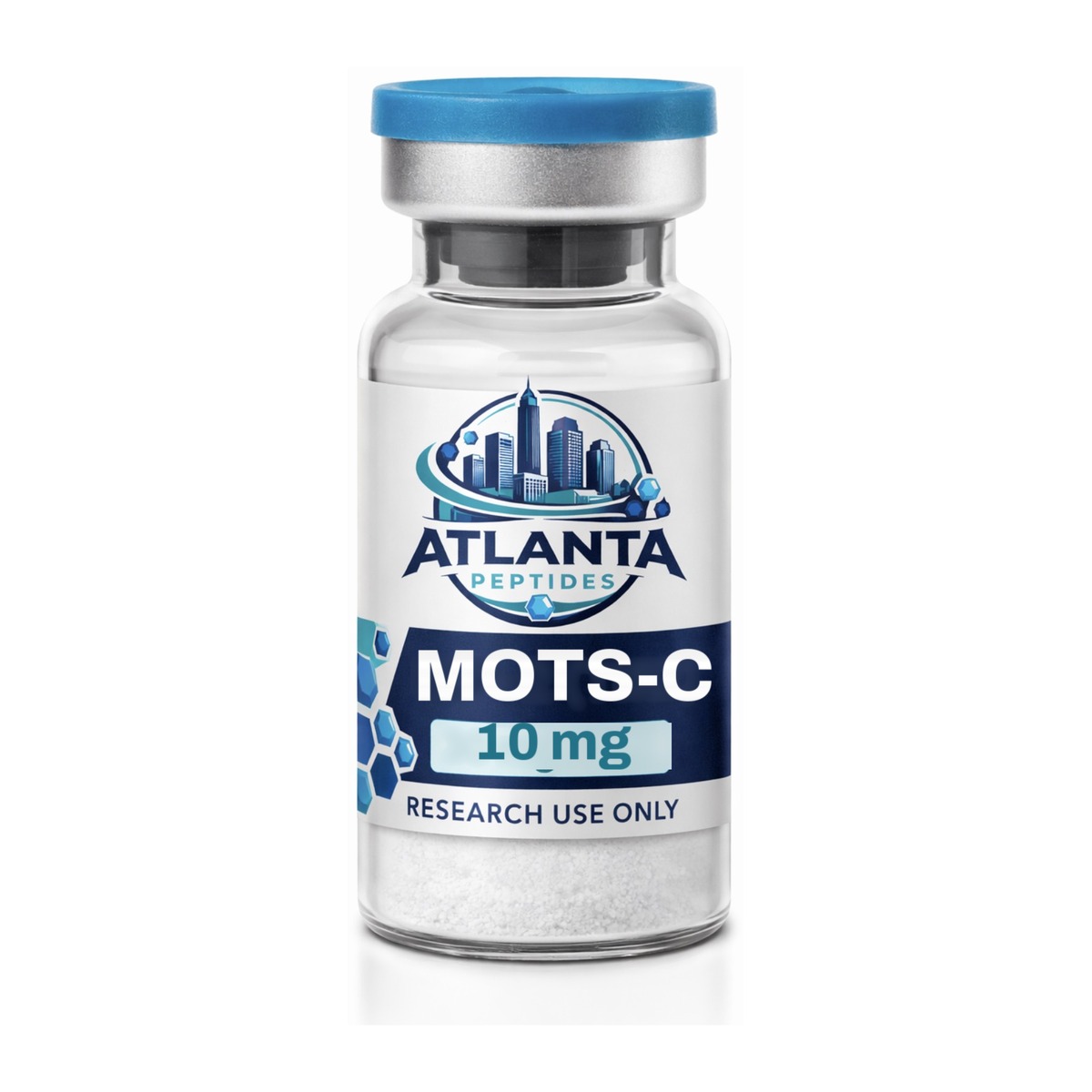
MOTS-c in Laboratory Research
MOTS-c is a 16-residue mitochondrial-derived peptide — unusual in that its sequence is encoded within the mitochondrial 12S rRNA gene rather than in nuclear DNA. It was among the first mitochondrial-derived peptides shown to act as a signalling molecule outside the organelle itself.
Within controlled laboratory environments, research groups use MOTS-c as a tool compound to examine how mitochondria communicate their metabolic state to the rest of the cell.
Research Applications & Study Focus
Published in vitro work has concentrated on AMPK-pathway activation, insulin sensitivity in cell models, and the mitonuclear retrograde signalling axis — the mechanism by which mitochondria signal metabolic status back to the nucleus. The peptide also appears regularly in exercise-physiology and metabolic-ageing model systems.
Because each lot is produced to a consistent specification, laboratories can hold assay conditions steady across repeated metabolic experiments without introducing batch variability.
Purity, Handling & Verification
Each batch is supplied as a sealed, lyophilized vial and is independently analysed by a third-party laboratory using HPLC and mass spectrometry; the full certificate of analysis is published against its lot number, so results can be verified before use. Store the lyophilized material cool, dry and out of direct light, and reconstitute with bacteriostatic water under standard aseptic laboratory practice.
This material is offered strictly for in vitro laboratory research use only. It is not for human or veterinary consumption, and not for diagnostic or therapeutic use.




Reviews
There are no reviews yet.